
There’s the to-do list on the fridge.
And then there’s the real list; the one that lives in your head.
The reminders, the planning, the anticipating, the emotional smoothing, the follow-ups no one else noticed. Invisible to everyone… except the one carrying it.
Why Mental Load Is Invisible (But Heavy)
Mental load is tricky; not because it’s small, but because it’s silent. It doesn’t show up as overflowing laundry baskets or unwashed dishes. It shows up in your mind, in the constant running list of everything that needs to happen for a home or family to function.
It’s cognitive work: anticipating, remembering, planning, coordinating, executing, preventing problems before they appear.
None of it looks “busy” from the outside, but it occupies mental space all day.
And in many homes, this load isn’t equitably shared.
One partner quietly becomes the “default” thinker; the one who notices what’s running out, keeps track of appointments, remembers upcoming events, and manages the emotional temperature of the house.
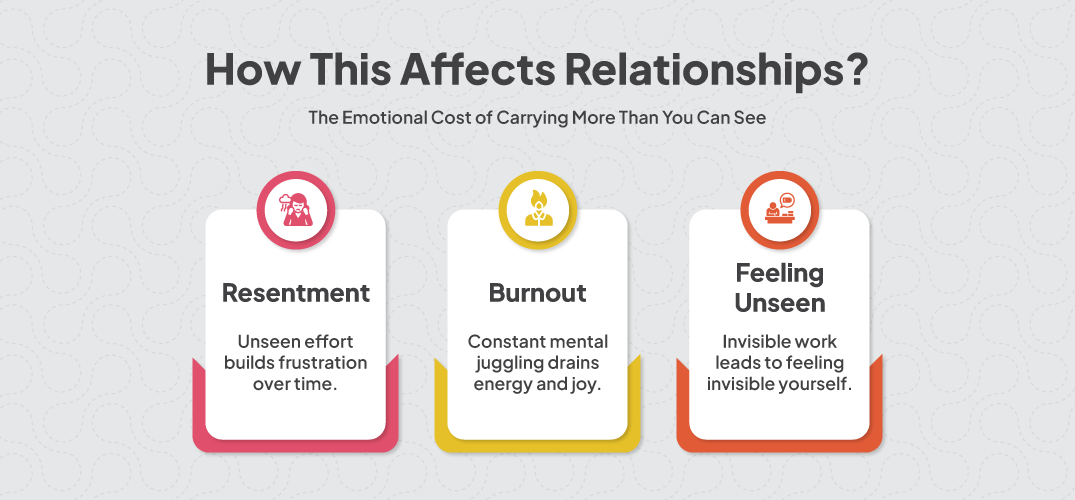
Because this work is often invisible, it frequently goes unacknowledged, even by those who benefit from it. But just because something isn’t seen… doesn’t mean it doesn’t weigh you down.
Mental load is heavy precisely because it’s invisible, carried alone, yet affecting everything.
Everyday Examples of Invisible Mental Load
Invisible mental load doesn’t show up as a single big task. It appears as hundreds of tiny mental tabs opening at once. Here are the everyday moments where it quietly builds up:
Anticipating Needs: You’re the one who knows the electricity bill date, your partner’s prescription refill, social commitments, and that the school form is due tomorrow morning. It’s not written anywhere, but it lives in your head.
Planning for Everyone: Groceries for the week, meal planning, who needs to be where and when, upcoming appointments… even before things happen, you’re already thinking three steps ahead.
Managing Household Harmony: Sensing when tensions are rising, adjusting plans to avoid conflict, comforting a stressed child, keeping everyone emotionally steady. Small shifts, big energy.
Micro-Coordination: The constant stream of everyday decisions: “What should we eat?” “Who will pick up the kids?” “Where did we keep the charger?” You become the human search engine + scheduler + Coordinator.
Emotional Monitoring: Noticing who’s tired, who needs support, and who had a rough day. You quietly adapt the evening, the tone, the plans, without anyone asking.
How to Share the Load (Practically & Fairly)
Sharing the mental load isn’t about “helping more.” It’s about building a home where responsibility feels balanced, predictable, and supportive. Here’s how couples can move from silent expectations to shared ownership.
Replace “Help” with Shared Ownership: When one partner says, “Can you help with this?”, it assumes the responsibility already belongs to them. A small shift and reframing from helping to shared ownership changes everything.
Instead of: “Can you help with dinner?”
Try: “Let’s decide what we are making for dinner this week.”
It signals partnership, not assistance.
Own It Completely – From Planning to Done: Sharing the load works best when each person owns a chore completely, from planning to completion, not just the execution. For example:
- Meals: planning → grocery list → shopping → cooking → clean-up
- Kids’ schoolwork: tracking → deadlines → supplies → submission
- Laundry: collecting dirty laundry → Laundry time → fold it → determine what belongs to whom → organize it → put the bin back where it belongs
End-to-end chore ownership removes the need for reminders and reduces mental fatigue.
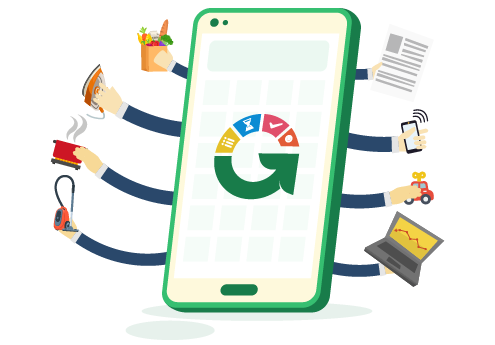
Use Tools Like Aligna to Create Visibility: Most mental load becomes overwhelming because it’s invisible. A shared system makes tasks visible, trackable, and fair. Aligna helps by:
- Creating shared to-do lists
- Visibility into who’s handling what
- Sending gentle reminders to remove manual friction
- Reducing the emotional labour of “being the only one who remembers”
Visibility = clarity = calmer homes.
Weekly Family Check-Ins: A 15 minute conversation each week can prevent friction and months of resentment. Questions to ask:
- “What’s coming up this week for us?”
- “Are there tasks that feel heavy for you right now?”
- “Do we need to redistribute anything?”
These small touchpoints keep both partners aligned and supported.
Simple Communication Scripts: Clear, kind language makes sharing the load easier. Here are scripts couples can actually use:
- When you feel overwhelmed: “I’m juggling a lot mentally. Can we relook at how we’re dividing things this week?”
- When reminding feels exhausting: “Reminding everyone what needs to be done is exhausting. Can we decide who owns this chore completely?”
- When something needs to be shared: “I’d like us to handle this as a team. How would you like to divide it?”
- When appreciating effort: “Thank you for taking this over, it’s really helpful.”
Small words, big relief.
What Shared Mental Load Actually Feels Like
Sharing the mental load isn’t just about dividing chores. It’s about creating a home where both partners feel seen, supported with space to breath. When the load is shared fairly, life begins to feel different in small but powerful ways:
You feel lighter:
Your mind isn’t constantly juggling reminders, deadlines, and next steps. There’s finally space to breathe and to simply be.
You feel emotionally supported:
Instead of carrying everything silently, you feel your partner stepping in with you.
Not as a favour.
Not as “help.”
But as a true partner.
You feel more connected:
Friction reduces, communication improves, and everyday life feels less like crisis management and more like connection.
You feel less alone:
The invisible weight you carried by yourself is suddenly acknowledged. You’re not the only one remembering, planning, organising, anticipating. You’re not the “default” anymore.
And this is exactly why we’re building Aligna.
Because families shouldn’t run on one person’s mental bandwidth.
Because cognitive and emotional labour shouldn’t be invisible.
Because harmony doesn’t happen by accident.
It happens when responsibility is shared, clearly and fairly.
Aligna is designed to bring visibility, balance, and calm into everyday life. A tool that turns “I’m carrying this alone” into “We’ve got this, together.”
We’re inviting a small group of early users to help us shape the future of Aligna. If you want a calmer, more organised, more emotionally supportive home…Fill out the form to join our Beta Tester group.
Be one of the first to experience how shared mental load can truly feel lighter. Together, let’s build households where the load is shared and everyone feels seen.
1 Comment